Circuits
In the first practical class Prem handed us a booklet and went over the book briefly what is going to be covered in circuits.
- Series Circuit
- Parallel Circuit
- Compound Circuit
 Unitec provides us with a premade circuit board we create circuits on them using the 12 volts supply.
We started making a series circuit with one bulb (smaller Bulb) using a control switch and a 10 amp fuse. We slowly made our way through using 2 bulbs (2 larger bulbs) with a control switch and a 10 amp fuse. We finished off series circuit by using 3 bulbs using a control switch and 10 amp fuse.
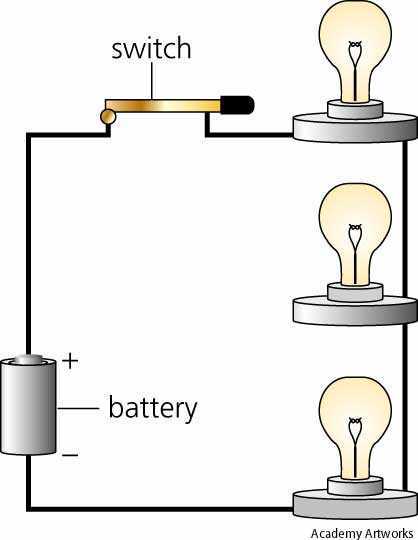 While we were doing the circuits we had to get the readings with multimeter and fill in the practical book we detailed explanations.
In a series circuit the current (amps) will be the same but the voltage is different, that is why the bulbs are not brighter in a series
circuit.
Parallel Circuit
We made a parallel circuit on the same circuit board as earlier.
 The first parallel circuit consists of 2 larger bulbs and a control switch and 10 amp fuse. And followed by we did a circuit this time use used all three bulbs and a control switch and a 10 amp fuse.
 All the circuits we made on a parallel circuit all the bulbs were brighter because of the same voltage going through the each bulb.
Compound Circuit
When a parallel and a series circuit are made together it is called compound circuit.
 We made a compound circuit with 3 bulbs and 2 of the bulbs are connected in parallel and the other 1 is connected in series. It is controlled with a switch and consists a 10 amp fuse. In a compound circuit the parallel bulbs are dim and the series bulbs are brighter.
ohhhhhhhhhhhh sorry then.
ReplyDeleteThanks bo
ReplyDeletenice blog man
ReplyDeletewhy were the parallel bulbs dim in the compound circuit?
ReplyDeletewhat was the voltage drop across them and how did this compare with the series part odf the circuit and why ?
these are the type of explanations we are looking for in your blogs