Wednesday, May 18, 2011

4841 Starter Motor Tejo Tumuluri

Starter motor
The main purpose of the starter mote is to start the engine. There are three types of starter motor, Inertia, Pre-engaged and gear reduction.
Before we took apart the starter motor we had to carry out a bench test and the readings we got was 11.9 volts and 33.8 amps to meet the specs we had to get no less than 11 volts and between 30 to 50 amps and we were within the specs.

Armature.
After taking apart the starter motor we had to do a visual check on the armature to see if there was any overheating, burning, physical damage and poling, the armature had no damage in anyway.
Then we did a ground test to see if the armature was grounded to meet the specs we had to get a reading of infinity and that’s what we got. So we moved on to the continuity test.
Then we moved on to check the diameter of the armature to find out if there was any wearing. Results we got was 30mm so we were within the specs and we also checked the mica undercut for any physical damage, we got 0.8mm to meet the specs we had be within 0.7mm-1.00mm so we met the specs.

Armature short test
We carried a short test using a growler to see if the armature was shorted, to carry the test you need a hacksaw blade, growler and the armature. Place the armature on the growler and the growler on then place the hack saw blade on top of the armature and rotate the armature to see if the blade vibrates, if the blade vibrates the armature is shorted and ours wasn’t shorted.

Brushes
We had to measure the brushes to see if there were worn, if there were they wouldn’t make contact with the armature when the armature rotates. We had three brushes and the readings we got was 5mm which met the specs.

Solenoid magnetic switch
We did the pull winding test by connecting the switch to the 9v power supply to see if the plunger will pull in and ours did so the magnetic switch is in working order.

Hold in winding test
We did the hold in winding test by connect the 9 volt power supply to the solenoid body and the plunger should remain in and when the power is disconnected the plunger should automatically release and our did so it is working order.

Then we put the Starter Motor back together and did the bench test to see if we put back together alright and also to check if it working after re-assembling and the results we got was 12.26 volts to meet the specs it should be no less than 11 volts and for current we got 45.1, to meet specs it should be between 30 to 50 amps so we meet the specs for volts and current and the alternator is fine and in working order.

                

Friday, May 13, 2011

4841 Relays Tejo Tumuluri

Relays

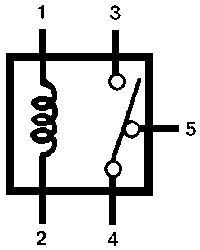
Relay is used to switch between circuits. Relay uses low amperage to switch a higher amperage circuit. Inside the relay there is a coil it creates magnetism, the circuit have a set of contact points that switched by the magnetism.
The test we had to do was on a 5 pin relay and the pins designations was,

·      86 positive side of a control circuit.
·      85negative side of control circuit.
·      30 battery supply for switched circuit.
·      87a normally closed switch circuit.
·      87 other switch circuit.

Then we had to wire up a relay on the circuit board with 2 light bulbs that are controlled by a switch. Then we had to take the reading of available voltage when the circuit was on and also when off.

 Circuit off                               Circuit on
86) 13.07v                             86) 13.12v
85) 13.06v                             85) 0.00v
30) 13.13v                             30) 13v
87a) 13.15v                          87a) 0.00v
87)  0.00v                              87) 13.08v

There was voltage change on each terminal because:
·      86 Is the input position so there will always be 13 volts there.

   85 There is 12 volts at off position when goes on there is 0.00 volts because it is consumed.
·      30 Is the input so there will always be 13 volts at that point.
·      87a There is 13 volts because the circuit is off and the coil is not magnetised so there is no switching.

·      87 is 0 volts because the circuit was on and the coil is magnetised and switched from 87 to 87a.

Wednesday, May 11, 2011

4841 Battery Tejo Tumuluri

Battery Assessment

The main purpose of the battery is to power the starter motor and the ignition system and also provide power to accessories in the car. Car battery comes in 12 volts, and has six plates which are 3 positive plates and 3 negative plates and each plate has 2.1 volts = 12.6 volts. Batteries come in 3 types’ conventional, maintenance free and gel type.


Car we carried the test was on:


Vehicle: Mazda
Model:323
year: 1981
Make of Battery: Lucas
Battery No: 127HD
CCA: 400


On 3/05/11 we carried out a battery testing assessment we started off with a visual check to see if anything requires attention and we found out that the negative terminal needs cleaning and we can clean by using soda/water and apply petroleum gel to protect it from rust. Then we did a test on electrolyte to find if the levels were high, ok or low. And the results we got were okay. So we moved on to perform an open circuit voltage test the result we got was 13.4 volts, state of charge percentage was over 100%. Further action we had to take to continue the test was to remove the surface charge.

Specific Gravity Test

cell
1
2
3
4
5
6
Reading
1.275
1.275
1.275
1.275
1.275
1.275
Colour
Green
Green
Green
Green
Green
Green

The above readings were from the gravity test and the allowable specs have to be within 25-50 and the variation we got was 0 so we passed the gravity test.

High Rate Discharge Test

We had to carry out a load test on the battery on using a load tester we had to determine the load current and apply which was 200 (to get the load current you divide the cca rating by 2, 400/2 =200). You apply the load for 10 seconds and battery must hold above 10 volts and our result was 10.4 so we met the specs.


Last test was analysing our results and note findings and recommendations.
1.  Visual check. We did a visual check on the battery and we found out that the negative terminal has corrosion on it. To clean it you will need to use soda water.
2.  Specific Gravity: for the specific gravity test all the results we got was same and equal which states that all the cells have equal electrolyte readings.
3.  For the ocv test the results we got was more than the specified voltage. We got a reading which was 13.4 volts which has surface charge we removed by cranking the engine.


Monday, April 18, 2011

4841 Alternators & Batteries

Alternators

Rotor windings
This week in class we started new subject alternators. First we had to disassemble it and carry out a test on rotor winding to ground test. To carry out these test all u need it a Multimeter, we had to set the Multimeter on 2k and place the positive lead on the rotor shaft and the negative lead on the slip rings and the reading should be infinity, if we get a reading that means that the rotor windings is shorted to the ground and we need to replace. After this this test we carried a test on internal resistance (slip rings) and according to the specs we need to within 2-6 ohms.
Stator windings
The next test we carried out was on the stator windings to carry out this test we had to place the negative lead on the common point (the one with most wires) and the positive lead on the other winding terminals, to meet the specs we had to get a reading between 0.0-.2 ohms the readings we got was 0.00 so we were within the specs. After the test we had to carry out a ground test for this we did set the Multimeter on 2k place the positive lead on the common terminal and the negative on an alternator body, to meet the specs we had to get a reading infinity if there was a circuit the stator has grounded and needed to replace. The readings we got was infinity and we were within the specs.


Rectifier positive & negative diodes.
The rectifier is the part that coverts the ac current to dc current, for the rectifier to meet the specs, out of four terminals the three terminals should show high resistance and one terminal to show infinity.

Voltage regulator
To test the voltage regulator we had to use a Transpo regulator tester, by using the information chart we had to set the tester on 12 volts and field current to 0.5 amps and had to connect the leads according to the diagram of the regulator. To meet the specs we had to get a reading of 14.6 volts.
It is used in alternator to maintain a constant level of voltage to the battery when required.                                                                                                            
The next day in class we had to do an assessment on car similar to what we did in the class.

Batteries
The last day of this week we got introduced to batteries the first thing we had to do was a visual check on the company, model no and cc rating. Then another visual check we had to do was on loose connections, corrosion, cut or any damaged wires and leaking on the batteries. After that we had to check the electrolyte levels and we did an open circuit voltage test and then find out the state of charge. Then we carried out a electrolyte specific gravity test and refill the battery if the water is low, record the readings on each cell and the colour of water in it (murky or clear). We finished of the day by carrying a load test on the battery using a load tester.

Wednesday, April 13, 2011

Safety

In the first theory class Ian went over the safety hazards & safety precautions while working in the workshop.  The main safety precaution while in a work shop is to always wear safety boots and an overall at all times. When the safety precautions are not followed in the workshop can lead to serious injuries and may lead to death.

Sunday, April 10, 2011

4841 Electrical Blog

Circuits
In the first practical class Prem handed us a booklet and went over the book briefly what is going to be covered in circuits.
  •  Series Circuit
  • Parallel Circuit
  • Compound Circuit


Series Circuit
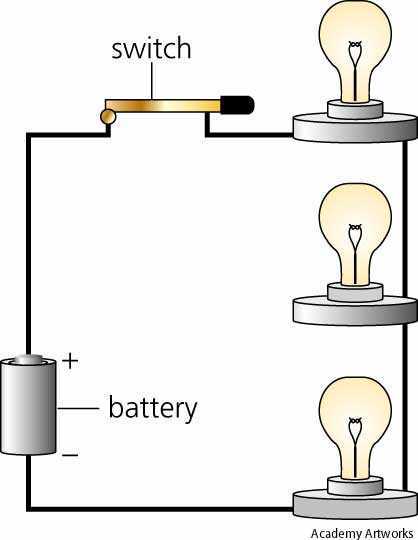
Unitec provides us with a premade circuit board we create circuits on them using the 12 volts supply.

We started making a series circuit with one bulb (smaller Bulb) using a control switch and a 10 amp fuse. We slowly made our way through using 2 bulbs (2 larger bulbs) with a control switch and a 10 amp fuse.  We finished off series circuit by using 3 bulbs using a control switch and 10 amp fuse.


While we were doing the circuits we had to get the readings with multimeter and fill in the practical book we detailed explanations.
In a series circuit the current (amps) will be the same but the voltage is different, that is why the bulbs are not brighter in a series 
circuit.


Parallel Circuit
We made a parallel circuit on the same circuit board as earlier.
The first parallel circuit consists of 2 larger bulbs and a control switch and 10 amp fuse. And followed by we did a circuit this time use used all three bulbs and a control switch and a 10 amp fuse. 
All the circuits we made on a parallel circuit all the bulbs were brighter because of the same voltage going through the each bulb.


Compound Circuit
When a parallel and a series circuit are made together it is called compound circuit.
We made a compound circuit with 3 bulbs and 2 of the bulbs are connected in  parallel and the other 1 is connected in series. It is controlled with a switch and consists a 10 amp fuse. In a compound circuit the parallel bulbs are dim and the series bulbs are brighter.


Monday, April 4, 2011

Fuels


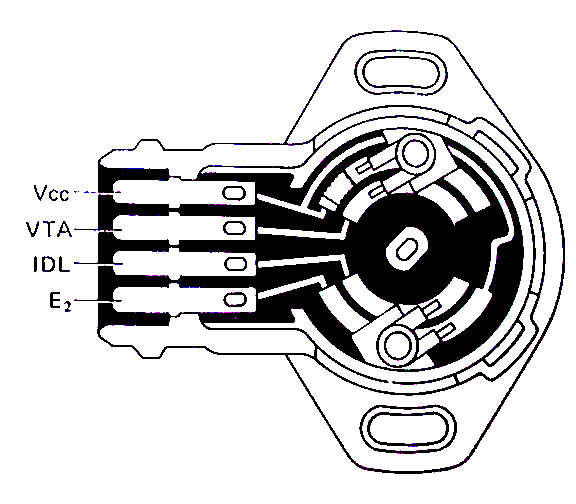
TPS Sensor
Cold – AC Volt 0.3mv
Crank – AV Volt 0.3mv
Idle – AC Volt 0.4mv
Rev – AC Volt 5.6 mv
Tps sensor measures the throttle position in an internal combustion chamber. We did some tests to found out how much mv was putting out. When it is cold it was putting out 0.3mv (av) when we cranked the engine it was still putting out 0.3mv when the engine was idling at a normal temperature it was 0.4mv when we rev the engine it was at the  highest volt 5.6mv. All the reading will be sent to the ecu and the ecu process it and it will adjust the engine and the fuel injection timing.


Knock Sensor
Cold – 0.277 HZ
Crank – 6.35 HZ
Idle – 5.55 HZ
Rev – 12.7 HZ
Knock sensor is listing device which is located by the intake manifold. We did some test to find out to see how the frequency differs in different scenarios when the engine was cold it was 0.277HZ and when we cranked the engine it was 6.35 HZ and when the engine was idling at a normal temperature it was 5.55 HZ and when we rev the engine it was at its highest 12.7 Hz. All this information is sent to the ecu and ecu process it and it adjust the engine timing. The engine knocking is also known as pining.


Closed loop fuel control
The closed loop fuel system determines how hc, co and nox leaves the tail pipe. The closed loop system works during normal idle and cruise operations and makes adjustments to the fuel injection based on the signals from the oxygen system.
During closed loop operation the air / fuel mixture is 14:7 to 1 air/fuel ratio (stoichiometry).